
What does alligator cracking mean for a parking lot?
Alligator cracking means the base under the asphalt has failed. Why sealing does nothing, what the repair involves, and how to prioritize it on a budget.
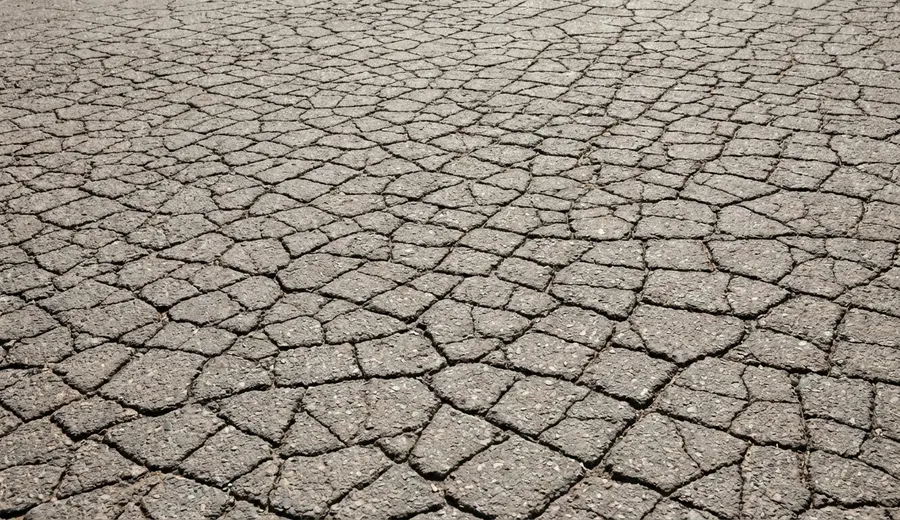
Alligator cracking is a pattern of interconnected cracks that looks like reptile skin, and it means the base under the asphalt has failed. Sealing it accomplishes nothing, because the problem is below the surface. The area needs cutting out and rebuilding, or across a large enough area, repaving.
How do I know it is alligator cracking and not ordinary cracking?
Look for connection. Ordinary cracks are lines, whether they run along the pavement or across it, and the surface between them is intact. Alligator cracking is a web. The cracks join each other and break the surface into small irregular pieces, which is where the name comes from.
The second tell is what happens when a vehicle drives over it. Alligatored pavement flexes. If you can see the surface move under a wheel, the material underneath is no longer supporting it.
| Pattern | What it is | What it needs |
|---|---|---|
| Single lines running with traffic | Longitudinal cracking | Clean and seal |
| Single lines running across | Transverse cracking | Clean and seal |
| Fine surface lines, no pattern | Hairline cracking | Sealcoat |
| A dip with cracks around it | Base softening | Cut out and rebuild |
| Interconnected web, surface flexes | Alligator cracking | Full depth repair or repave |
Why does alligator cracking happen?
Load meeting a base that can no longer carry it. Water gets under the pavement through cracks or an unsealed edge, the base material softens, and the asphalt above it starts flexing every time a vehicle passes. The surface is not failing on its own. It is being asked to bridge ground that stopped holding it up.
Asphalt tolerates a certain amount of flexing. Past that point it fatigues and breaks up, and it breaks up in a web because the stress is coming from underneath across an area rather than along a single line.
It shows up first where the load is heaviest. On a commercial lot that means drive aisles, entrances, dumpster pads and anywhere delivery trucks turn.
Can alligator cracking be sealed or crack filled?
No, and this is the important part. Sealcoating is a coating on the surface, and crack filling closes individual cracks. Neither one touches a failed base. Filling a web of interconnected cracks means spending money on a pattern that is going to keep moving underneath the repair.
Gideon Duarte, Co-Owner of Select Coatings, treats it as the line where surface work stops being honest. Sealcoating protects asphalt from further damage. It does not restore structure, and it will not hide a surface that is coming apart.
There is one middle case. Where there are many small cracks in an area that has not fully broken down, the crew may apply gator patch, a type III slurry with extra sand, by the bucket over the affected area. That is a patching compound, not a seal, and it buys time. It does not repair a base that has failed.
Why does an overlay fail over alligator cracking?
Because the new asphalt copies the old. An overlay only makes sense where the existing pavement is still in reasonable condition. Placed over severe alligator cracking, existing potholes or widespread structural failure, it cracks through in the same pattern, usually within a season or two, because the base is still moving under both layers.
The same logic limits patching. A patch needs solid asphalt on all four sides so the new material bonds to pavement that is stable. If one edge is still cracked or alligatored, the surrounding pavement keeps moving and the patch cannot be expected to hold.
What do you do when the lot needs more than the budget allows?
You say what the pavement actually needs first, then you prioritize inside the money that exists. Those are two separate conversations and running them together is how a property ends up buying a surface treatment that was never going to hold. A golf course lot in Boise is the example worth telling, because it did not go the way a sales story would.
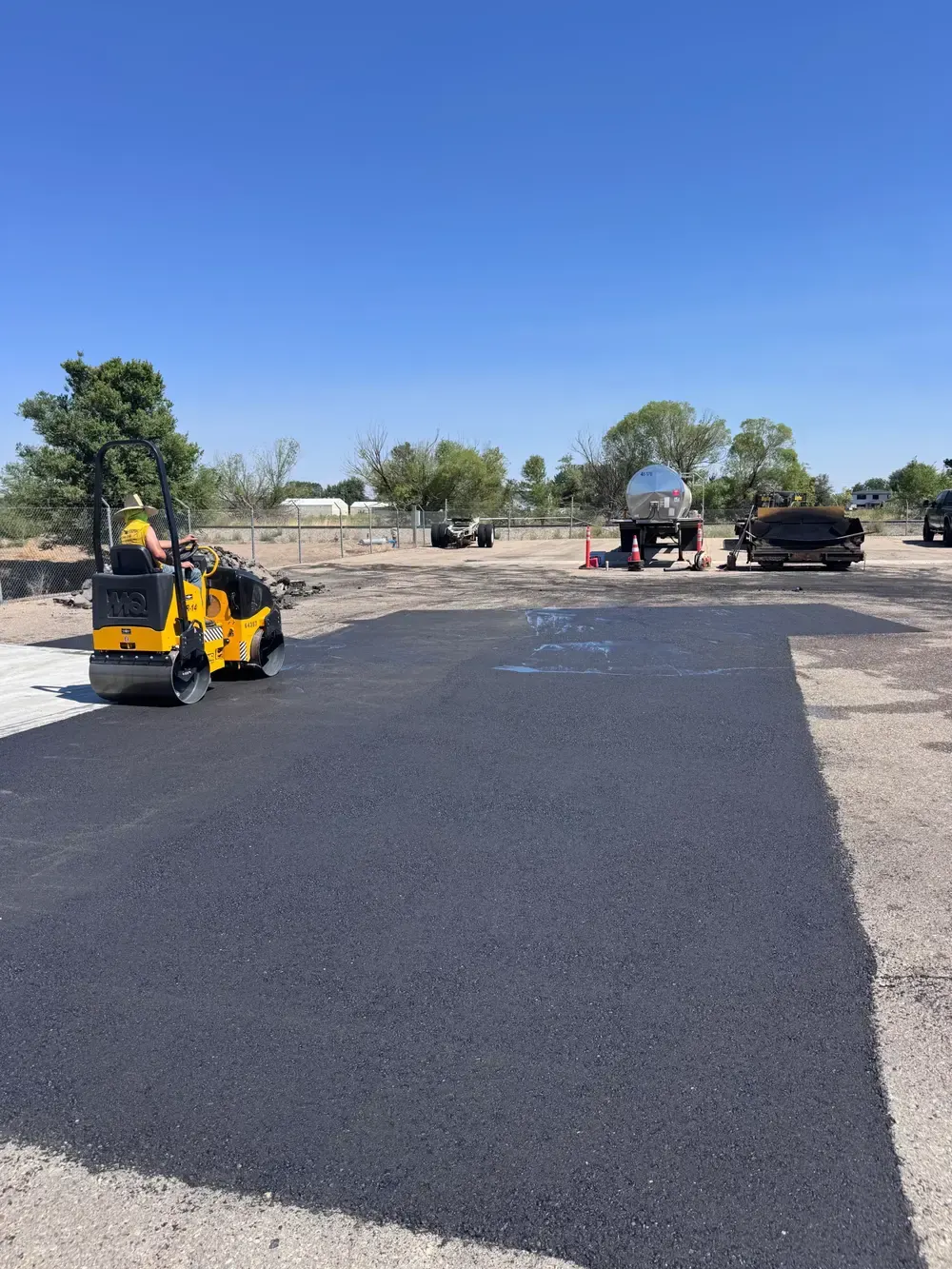
Gideon walked the lot and concluded it really needed a full tear out and repave, because the alligator cracking was widespread. The budget did not allow it. So rather than sell a surface treatment that would fail, the crew identified the worst failed areas, tore those out and repaved them, cutting back to solid asphalt on all four sides of each one. About 714 square feet came out in total. Less severe distressed areas were treated with gator patch, then hot tar went around the repaired edges to bond and seal the perimeter.
That is not the ideal repair and nobody pretended it was. It is the most useful work available inside the constraint, done in an order that puts the money where the pavement was worst.
The arithmetic behind that conversation is simple enough to hand to a board. Tearing out and repaving runs about $4 per square foot. Surface maintenance on sound pavement is a fraction of that. Every year a lot spends with an open, failing surface moves more of its square footage from the second number to the first.
What should a property manager do first?
Walk the lot and separate it into three buckets. Sound pavement with surface cracking goes on the maintenance cycle. Isolated failures get full depth patches. Areas that are alligatored across a meaningful share of their surface get scheduled for replacement, this year or on a phased plan.
Doing that once, in writing, turns a lot that looks like one large expensive problem into a sequence of decisions with different price tags and different urgencies.
Frequently asked questions
How fast does alligator cracking spread?
Faster once water has free access. A single pothole can expand into a large area of failure in one winter season, and alligatored pavement is already open to water across its whole surface.
Is it ever cosmetic?
No. Every other crack type in this cluster starts as a surface condition. Alligator cracking is structural from the moment you can see it.
Can you patch just the alligatored sections?
Yes, where the crew can cut back to solid pavement on all four sides of each area. When there is no stable perimeter left to cut back to, that is when full reconstruction becomes the answer.
What is gator patch, exactly?
A type III slurry, meaning extra sand added to the standard product, applied by the bucket. It is a patching compound for areas with a lot of small cracking. It is useful, and it is not a substitute for rebuilding a base.
Will sealcoating over gator patch look normal?
It evens out the appearance considerably. It does not make the area look new, and it will not hide a low spot or a pothole. That is worth setting expectations on before the work rather than after.
How do I stop it happening on the rest of the lot?
Keep water out of the base. That means sealing cracks before winter and keeping the surface coated, which is the least expensive work available and the reason the maintenance interval exists.
Written with Gideon Duarte
Gideon is Co-Owner of Select Coatings. This article uses the same pavement checks and plain-language recommendations the team explains before residential, commercial and HOA work across the Treasure Valley.
Meet Select CoatingsNeed an expert opinion on what you are seeing?
Send the approximate square footage of the affected area and a photo. We will tell you whether it is patching, phased replacement, or something that can wait a season.