
Why does asphalt crack in the Treasure Valley?
Three things crack asphalt here: surface aging, water with freeze and thaw, and base failure. How to tell which one you have from the pattern on the surface.
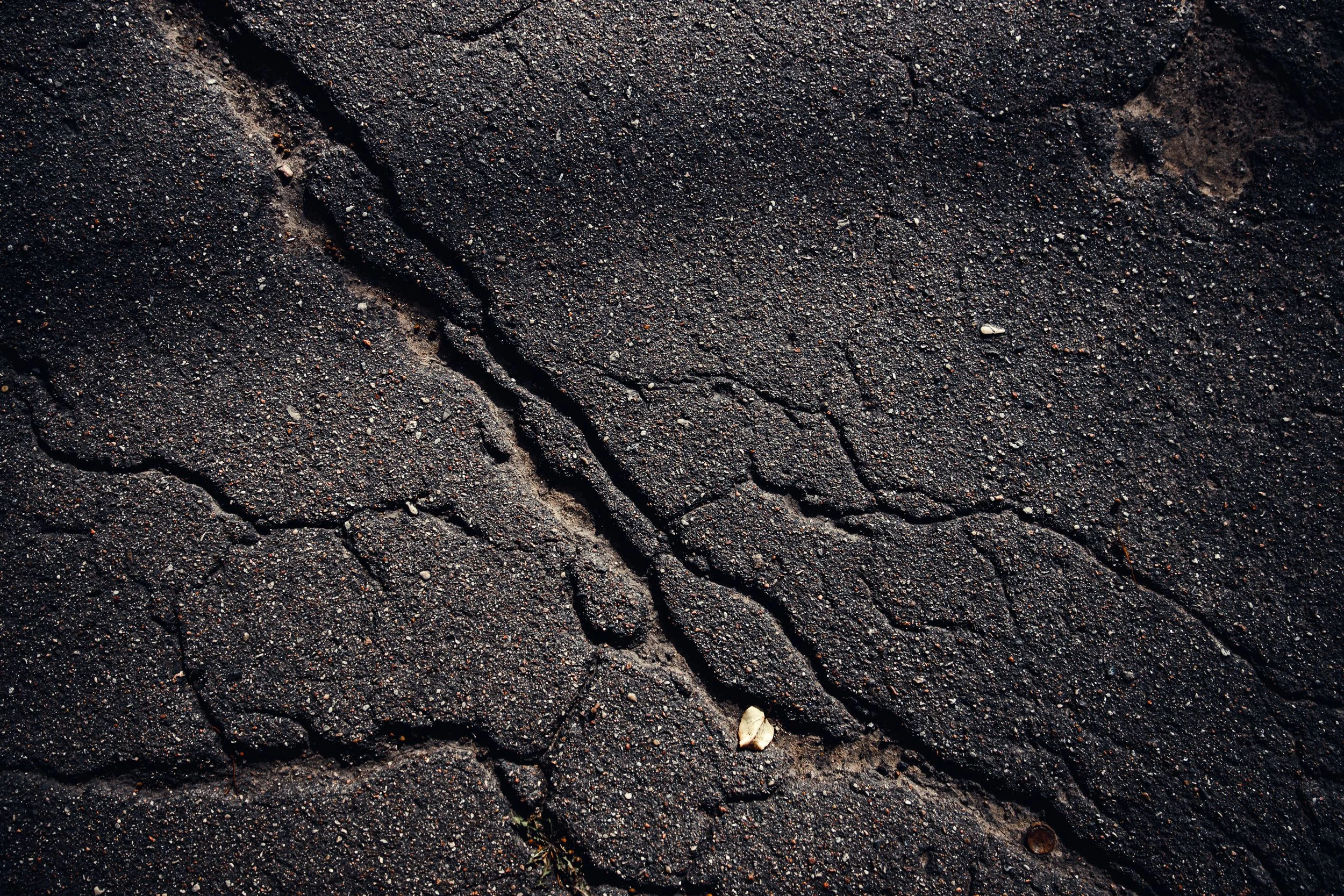
Asphalt cracks here for three reasons. The surface ages and turns brittle, water gets underneath and freezes, or the ground below loses strength. The pattern the cracks make tells you which one you have, and that decides whether the fix is sealing, patching, or rebuilding the section.
What are the three things that crack asphalt?
Aging, water, and load on a weak base. Every crack you will ever see on a driveway or a parking lot is one of those three, or one of them turning into the next one. They also happen in that order, which is why catching the first one is so much cheaper than dealing with the third.
The surface ages. Sunlight and oxygen break down the binder holding the asphalt together, starting at the top. The surface turns gray, goes porous, loses small rock, and starts showing fine lines. This is the cheapest stage to be at.
Water gets in and freezes. Any opening in the surface lets water below it. Here the water arrives in the same months as the freezing, so it goes in, freezes, expands, and levers the opening wider. Repeat that cycle enough times and a hairline crack becomes something you can put a coin in.
The base gives way. Once enough water has reached the material under the pavement, that material softens and stops carrying the load. The asphalt bends every time a vehicle passes, and eventually it fatigues and breaks up. This is the expensive stage.
They happen in that order. Which is the whole argument for dealing with the first one.
What makes this valley different?
The number of freeze and thaw cycles, and when the water arrives. This is not a harsh winter climate. Boise Air Terminal records 11.73 inches of precipitation a year, which is dry by most standards, and 19.2 inches of snow.
What it has instead is cycling. About 82 nights a year drop below freezing and warm back above it. Nampa records 132 nights below freezing and a mean daily high that never falls below freezing in any month, so nearly every one of those nights is followed by a thaw.
Then there is the timing. Of that 11.73 inches, 55.6 percent falls between November and March. July and August together deliver 0.57 inches. Moisture attacks the pavement in exactly the months it is freezing, and nearly disappears when it is hot.
The ground adds the third piece. Treasure Valley soils are silt loam formed in loess and volcanic ash, sitting over a strongly cemented duripan 20 to 40 inches down, with moderately slow permeability. Water soaks into the silt and perches on that hard layer rather than draining away. Silt is also the classic particle size for frost heave.
That is the local story, and it is not the one national articles tell. Those are usually written about expansive clay that swells and shrinks. Our failure mode is frost heave in silt and water trapped above a hard layer, and it calls for a different response.
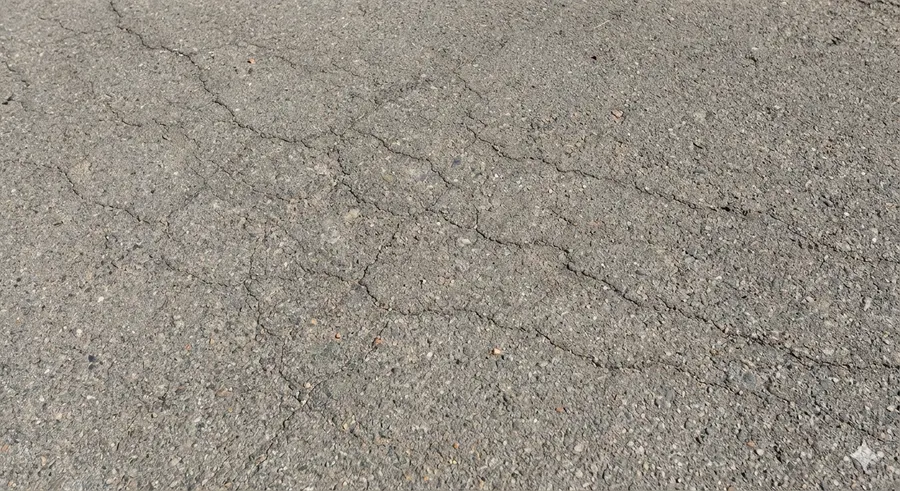 Hairline
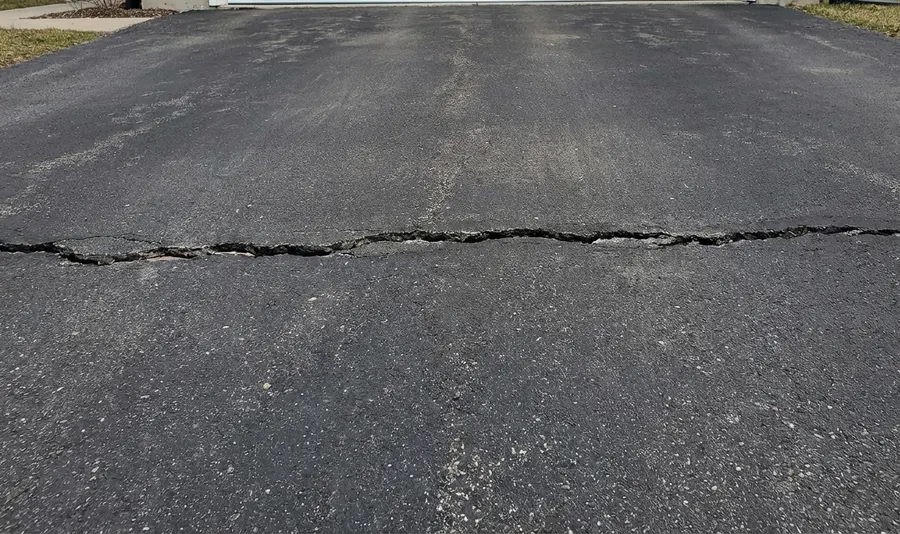 Transverse
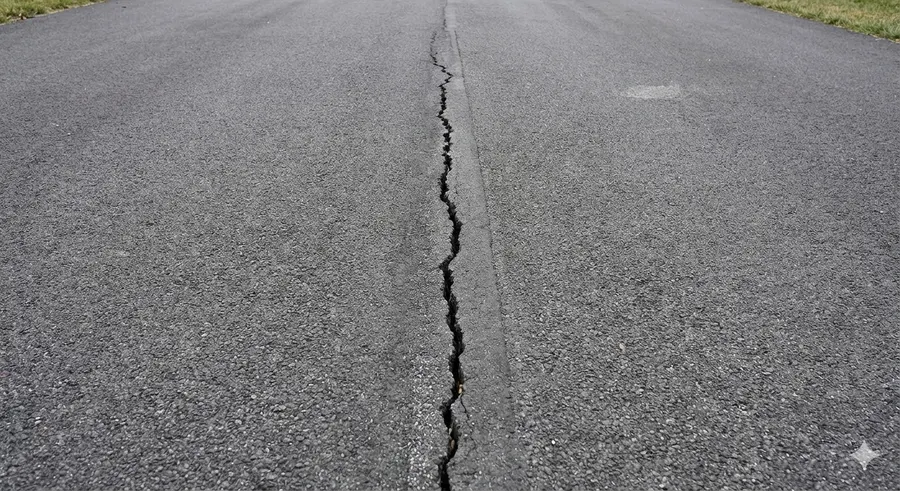 Longitudinal
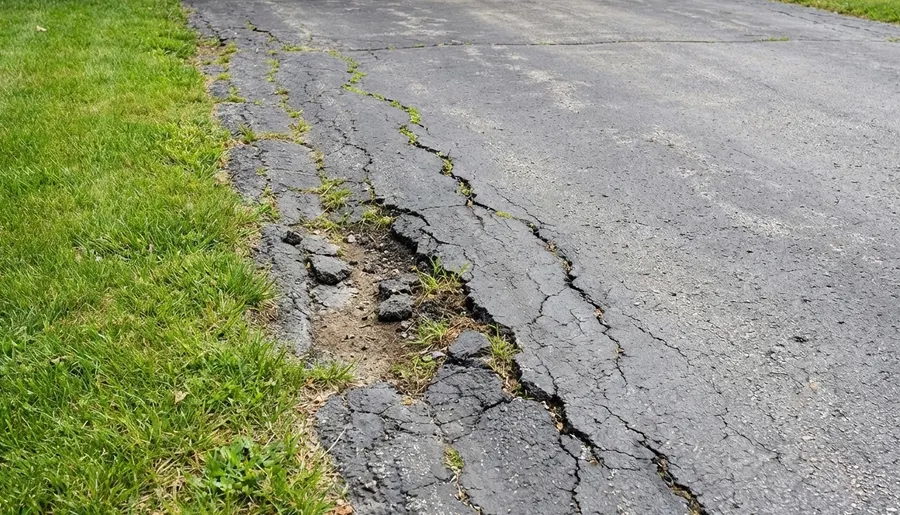 Edge
Edge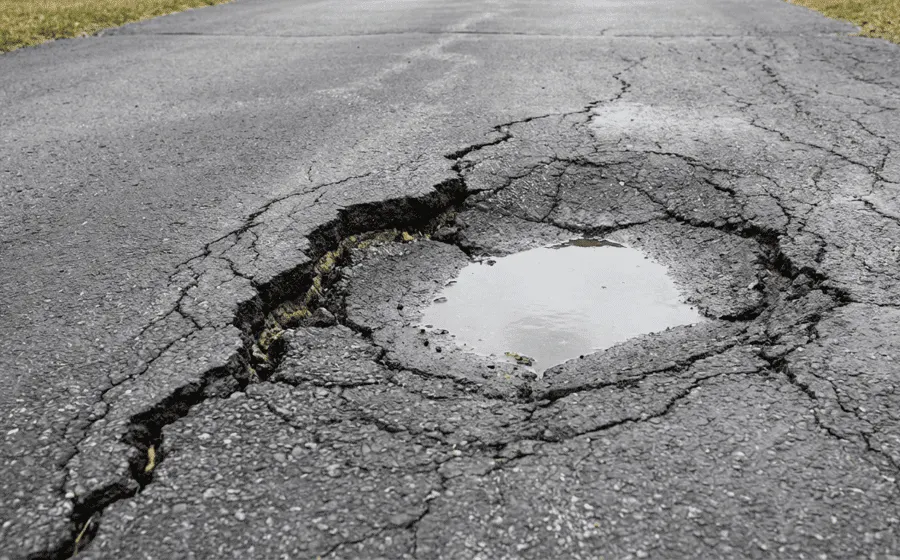 Sinking
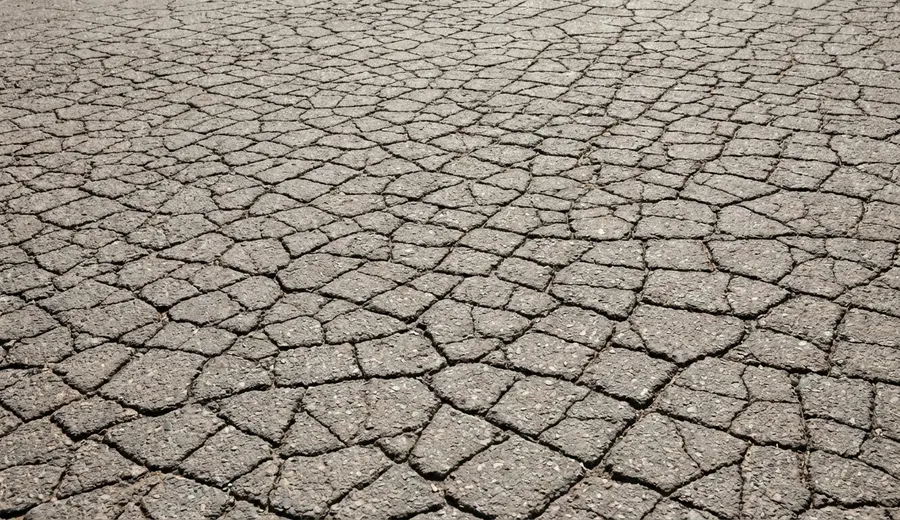 Alligator
How do I tell which kind of cracking I have?
By the pattern, not the width. A hairline crack and the first crack of a structural failure can measure the same, and they need completely different work. What separates them is the shape they make across the surface. Find yours in this table and go to the post that covers it.
| What you see | What it is | Read this |
|---|---|---|
| Fine lines, gray porous surface, loose rock coming free | Surface aging | Hairline cracks |
| Straight cracks running across the pavement | Thermal movement | Transverse cracks |
| Straight cracks running with the traffic, often along a seam | Joint or trench | Longitudinal cracks |
| Cracks within a foot or two of an unsupported edge | No lateral support | Edge cracks |
| A visible dip, cracks around it, water standing after rain | Base softening | Sinking and uneven areas |
| Interconnected web, surface flexes under a wheel | Base failure | Alligator cracking |
The top three are sealing work. The bottom three involve the ground and cost more.
What actually stops cracks from forming?
Keeping water out of the base, which means two things done together and in order. Cracks get cleaned out and filled first, then given time to cure. Only then does the surface get sealcoated. Doing either one on its own leaves the pavement open in a way that undoes most of the benefit.
Neither one alone does the job. Crack filling helps prevent future cracks but does not close what has already opened elsewhere in the surface. Sealcoating protects the surface but cannot fix a crack that is already there, and sealing over an open crack traps moisture underneath it. The combination is what works.
On a residential driveway that cycle runs every three to five years, with wear normally visible around year three. Heavy commercial traffic pulls that in to about every two years.
When is the best time to do this work?
Fall, and the window is shorter than people think. Gideon Duarte, Co-Owner of Select Coatings, recommends fall over spring because temperatures are moderate and there is less rain than in spring. Sealing in fall also puts the protection in place before the five months that carry most of the year's moisture and most of its freezing.
The practical limit is temperature. Work needs the surface above about 40°F for roughly 95 percent of the day, with around 80°F being ideal. The frost free window at Boise Air Terminal runs from a median last frost of 30 April to a median first frost of 15 October.
Frequently asked questions
Does every crack need to be repaired?
Every crack that is open enough to take water does. A true hairline crack gets bridged by sealer. Anything wider is a route into the base and it should be filled.
Is cracking a sign the asphalt was installed badly?
Usually not. Asphalt oxidizes and it moves with temperature no matter how well it was built. What good installation buys you is time, and a base that holds up when water reaches it.
Can I just sealcoat and skip everything else?
Only if all you have is surface aging. Sealcoating over open cracks does not seal them and traps moisture, so the crack work comes first.
How long can a maintained driveway last?
North of 20 years with sealcoating and crack filling on a regular interval. The pavement that fails early is almost always pavement that was left open to water.
Do commercial lots crack differently from driveways?
Same three mechanisms, different rate. A lot carrying delivery trucks loads its base much harder, so base failures show up sooner and concentrate in drive aisles, entrances and dumpster pads.
What is the most expensive mistake?
Waiting until the pattern becomes a web. Surface work is the cheapest thing we do. Tearing out and repaving runs about $4 per square foot.

Written with Gideon Duarte
Gideon is Co-Owner of Select Coatings. This article uses the same pavement checks and plain-language recommendations the team explains before residential, commercial and HOA work across the Treasure Valley.
Meet Select CoatingsNeed an expert opinion on what you are seeing?
Send a photo taken standing up, so the pattern is visible, and we will tell you which of the six it is and what it needs. We respond within 24 hours.