
Caldwell Pavement Experts
Sealcoating and asphalt maintenance in Caldwell, Idaho
Caldwell has more pavement rules than most valley cities, and most property owners have never been shown them. Free estimates, in writing.
What Caldwell actually requires of your parking lot
Most cities in this valley ask for a durable, dust free surface and leave it there. Caldwell is more specific than that, in two ways that are worth knowing before you accept anybody's quote.
Caldwell publishes a pavement section
Caldwell City Code 10-02-05 requires at least nine inches of compacted aggregate base under a minimum surface thickness of two inches for asphalt. Almost no contractor in this market mentions that, which means almost nobody quoting a Caldwell lot is quoting against it.
And Caldwell requires you to keep the lot up
The same code requires parking facilities to be maintained on a regular basis so that all striping and curb painting stays visible, and to be free from any potholes deemed to be unsafe.
Read that twice if you own commercial property here. Faded striping and unsafe potholes are not just a maintenance question in Caldwell. They are a code question. That moves a restriping quote and a patching quote out of the discretionary column, and it is a much easier conversation to have with an owner or a board.
Caldwell sets a parking maximum, not just a minimum
This one catches people out, because most cities only tell you the floor.
For general non-residential use, Caldwell requires a minimum of one space per 500 square feet and permits a maximum of one per 150. Industrial and manufacturing runs a minimum of one per 2,000 square feet and a maximum of one per 400.
So a Caldwell lot can be over-parked as well as under-parked, and a restripe is where that gets discovered.
Stalls are a minimum of nine feet wide by twenty feet long, and the aisle width moves with the parking angle. If you are laying out a Caldwell lot from scratch, or restriping one that has drifted, those aisle widths decide how many stalls actually fit.
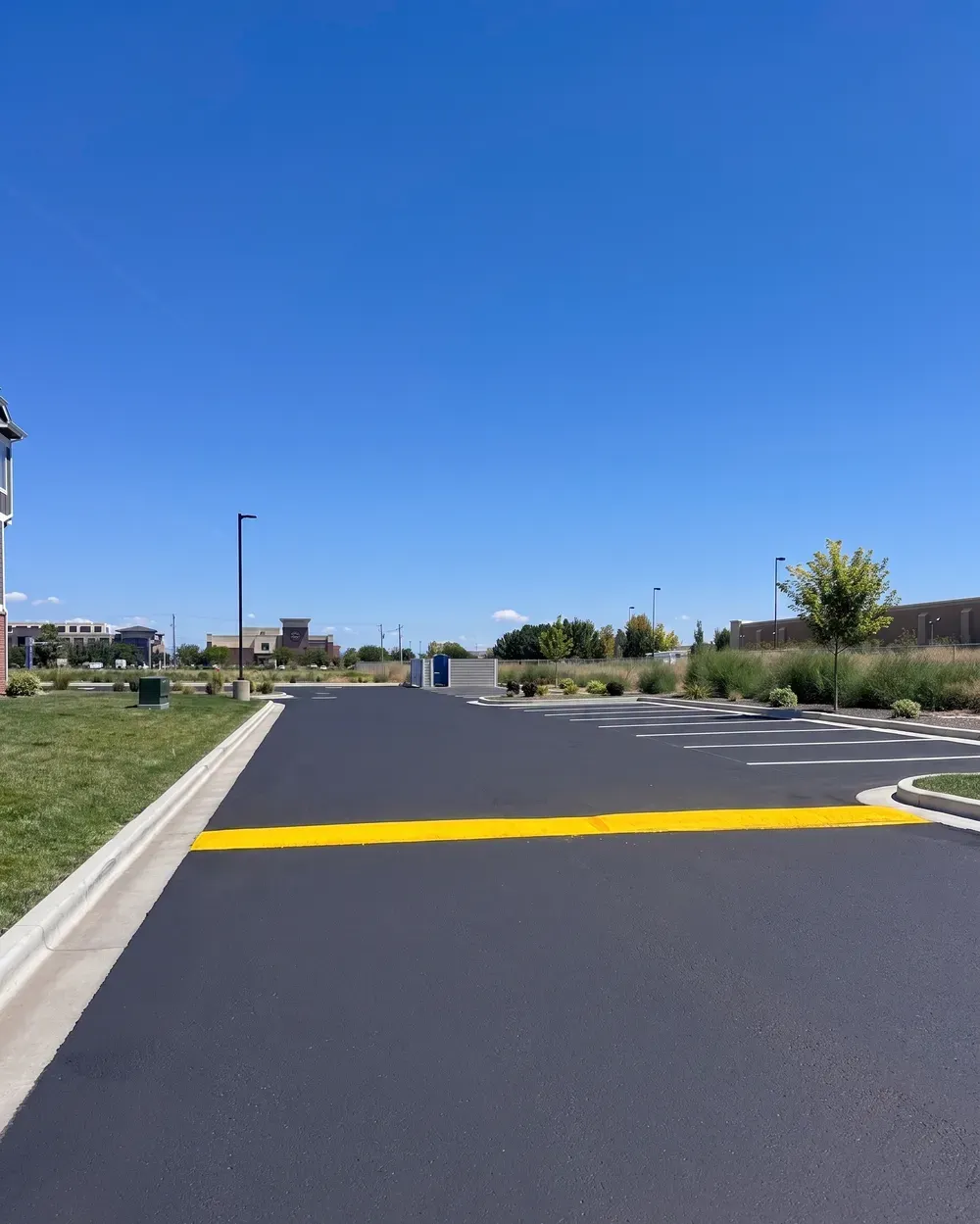
Why Caldwell pavement fails the way it does
Caldwell sits on ground that has been managed for water since 1901. The Pioneer Irrigation District covers about 35,200 acres across Canyon County. A lot of Caldwell parking sits on ground that was farmland with a high water table, drained by a system built for irrigation return rather than for pavement.
Caldwell's own code knows it. The city's stormwater manual requires borings 16 feet below a retention facility because shallow water is routine here.
And it freezes often. The honest number for Caldwell is roughly 105 to 130 freezing nights a year (based on records from Deer Flat Dam and Parma). That thermal cycling, combined with the high water table, is why crack sealing before winter is the single highest value thing you can do to a Caldwell lot.
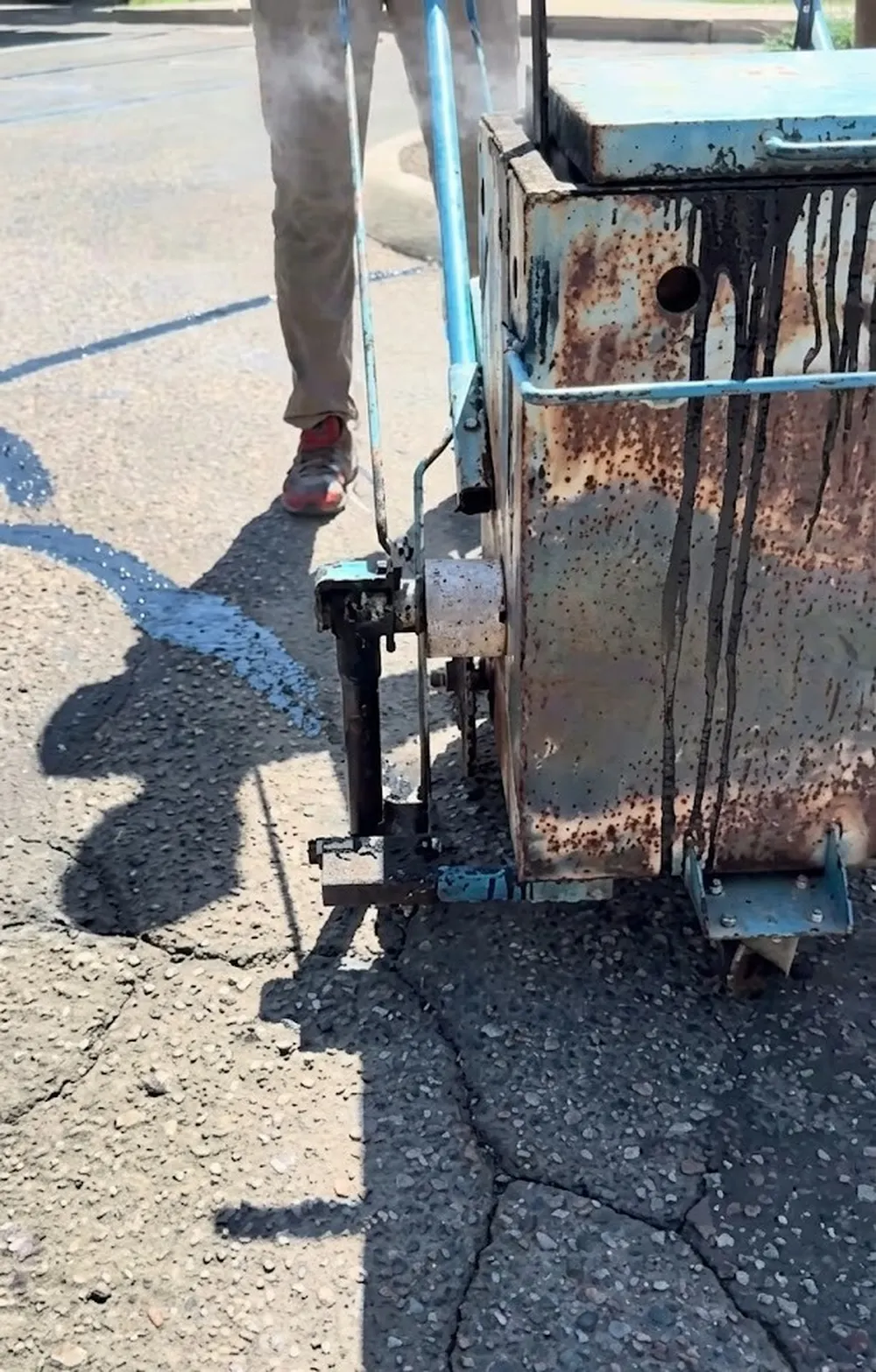
Work we have done in Caldwell
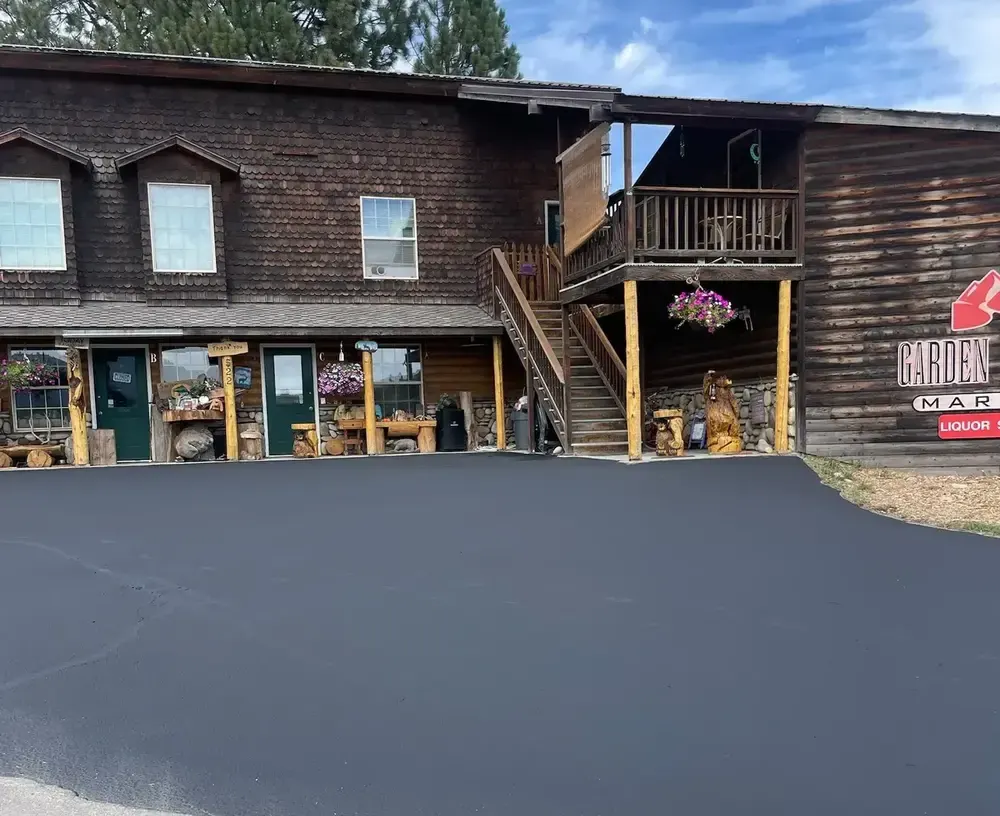
Caldwell First Baptist Church
About 80,000 square feet.An eighty thousand square foot lot is a big piece of asphalt for a congregation to look after, and it is the kind of property where the maintenance obligation in the city code and the reality of a volunteer budget meet each other.
Institutional lots also take a specific kind of wear: heavy on two mornings a week, empty the rest of the time, and hard on the striping in the aisles where everyone turns.
View our recent projects →Other Caldwell codes you need to know
If you are expanding a lot
Caldwell has the lowest stormwater trigger of any city in the valley. Adding any impervious area greater than 1,000 square feet subjects the project to the city's stormwater manual. A thousand square feet is roughly three parking stalls.
Sealcoating and striping add no impervious area. But if you are extending a lot, the stormwater review is part of the project and it is worth knowing before you budget it.
Where you can put snow
Caldwell City Code 05-01-11 requires every property owner to clear snow from the sidewalk in front of their property.
The operational part is where the snow goes. Removed snow cannot obstruct street travel lanes, and it cannot be piled in the city right-of-way or on adjacent private property without permission. That is why we agree on the stacking area before the snow plowing season starts.
What it costs
| Typical residential driveway, all in | $450 to $800 |
|---|---|
| Minimum sealcoating job | $450 |
| Commercial sealcoating, typical | About $0.22 per square foot |
| Striping, restripe | About $7.00 per stall |
| Striping, new layout | $12 to $15 per stall |
| Striping, by the foot | About $0.35 per lineal foot |
| Tear out and repave | About $4 per square foot |
| Snow plowing | $125 first hour, then $75/hr |
The commercial figure is what a typical lot lands at. It is not a quote. A lot that has been maintained and can mostly be blown clean prices very differently from one that has gone ten years without attention. We walk the property and give you a written scope before anything starts.
Questions we get in Caldwell
Does Caldwell require a minimum pavement thickness for a parking lot?
Yes. Caldwell City Code 10-02-05 requires at least nine inches of compacted aggregate base under a minimum asphalt surface thickness of two inches. High traffic lanes require at least ten inches of base under a minimum of three inches. Concrete requires at least four inches of base under six inches of surface.
Does Caldwell require parking lot striping to be maintained?
Yes. Caldwell City Code requires parking facilities to be maintained on a regular basis so that all striping and curb painting stays visible, and to be free from any potholes deemed to be unsafe.
How many freezing nights does Caldwell get?
Roughly 105 to 130 a year depending on where it is measured. Deer Flat Dam averages 106 nights at or below freezing and Parma averages 131. The gap is a siting effect, because Deer Flat sits next to Lake Lowell and the water holds overnight lows up. There is no weather station in Caldwell itself.
When can a parking lot be sealcoated in Caldwell?
Sealcoating needs temperatures above about 40°F for most of the day. In practice that is reliable from mid-April to mid-October in Caldwell, with the highest confidence from June through September.
Do I need a stormwater review to expand my parking lot in Caldwell?
If you are adding more than 1,000 square feet of impervious area, yes. Caldwell's stormwater manual applies at that threshold, which is roughly three parking stalls. Sealcoating and striping add no impervious area and do not trigger it.
Where can snow be piled in a Caldwell parking lot?
Not in a street or sidewalk travel lane, not in the city right-of-way, and not on adjacent private property without permission, under Caldwell City Code 05-01-11. It is worth agreeing on the stacking area before the season starts.
How often should a parking lot in Caldwell be sealcoated?
Every three to five years for a residential driveway. Commercial lots taking heavy vehicles daily want it about every two years.
Get a free estimate in Caldwell
Tell us what the lot is doing and we will come look at it.
If it needs less than you were told, we will say so, and if it needs more we will show you why on the pavement rather than on a quote.