
Treasure Valley Striping
Parking lot striping in the Treasure Valley
Laid out around your hours, dry in about twenty minutes, and marked to the requirements that actually apply in Idaho.
How long your lot is out of service
Oil based striping paint dries in about fifteen to twenty minutes depending on conditions. What takes time is the layout, not the paint, which is why we plan the work around when your customers and employees are actually there.
"The first thing we ask is what your hours are. We would rather work around you than take parking away from your customers."
Repainting what is there, or starting over
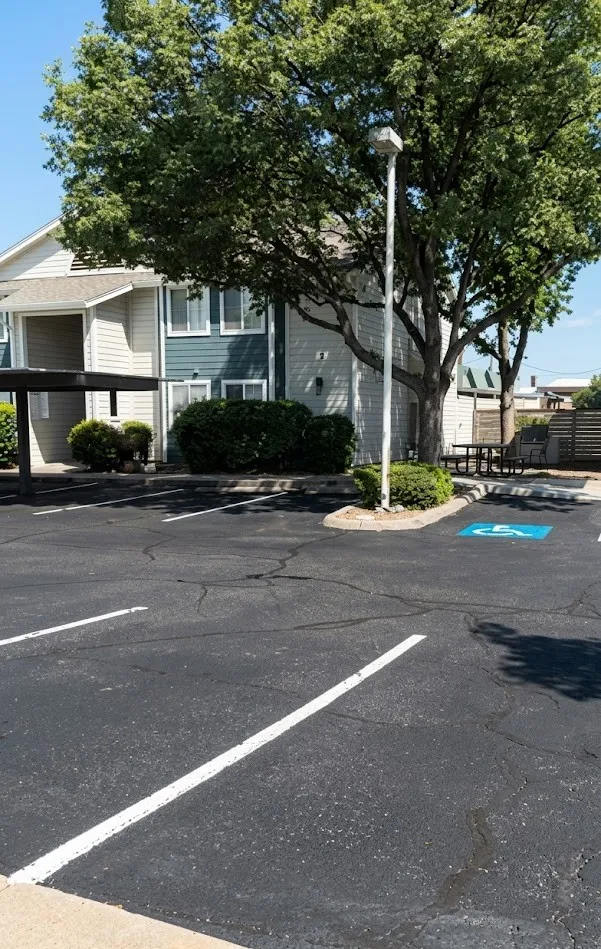
Restripe: Repainting the layout that already exists is our baseline timeline.
New layout: Establishing square reference points and building the layout off buildings, sidewalks, or curbing takes about twice as long.
When a lot has been restriped so many times that the old markings have become confusing, we may recommend sealcoating it and laying out fresh rather than adding another layer of paint over the confusion.
What the ADA actually requires
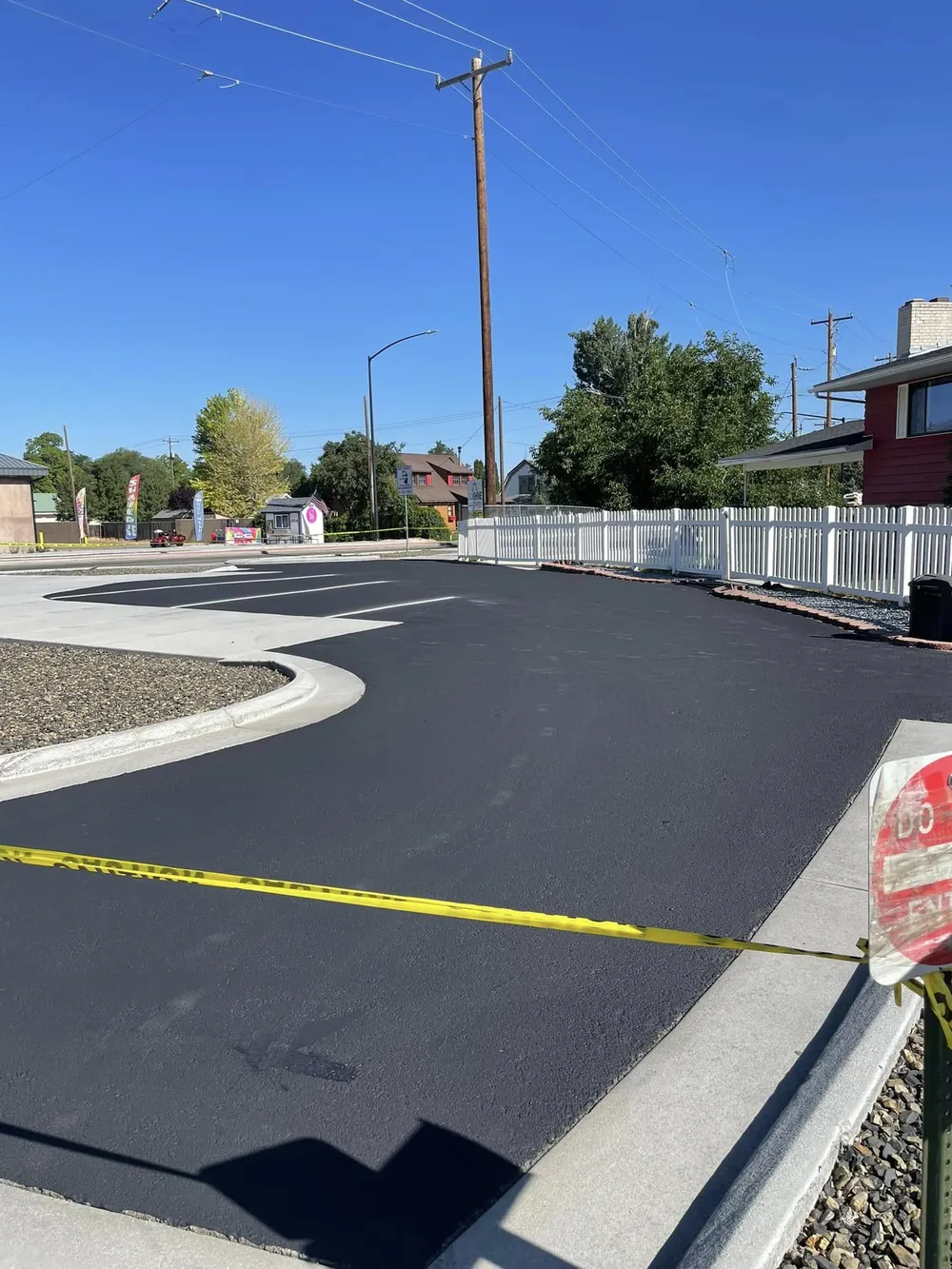
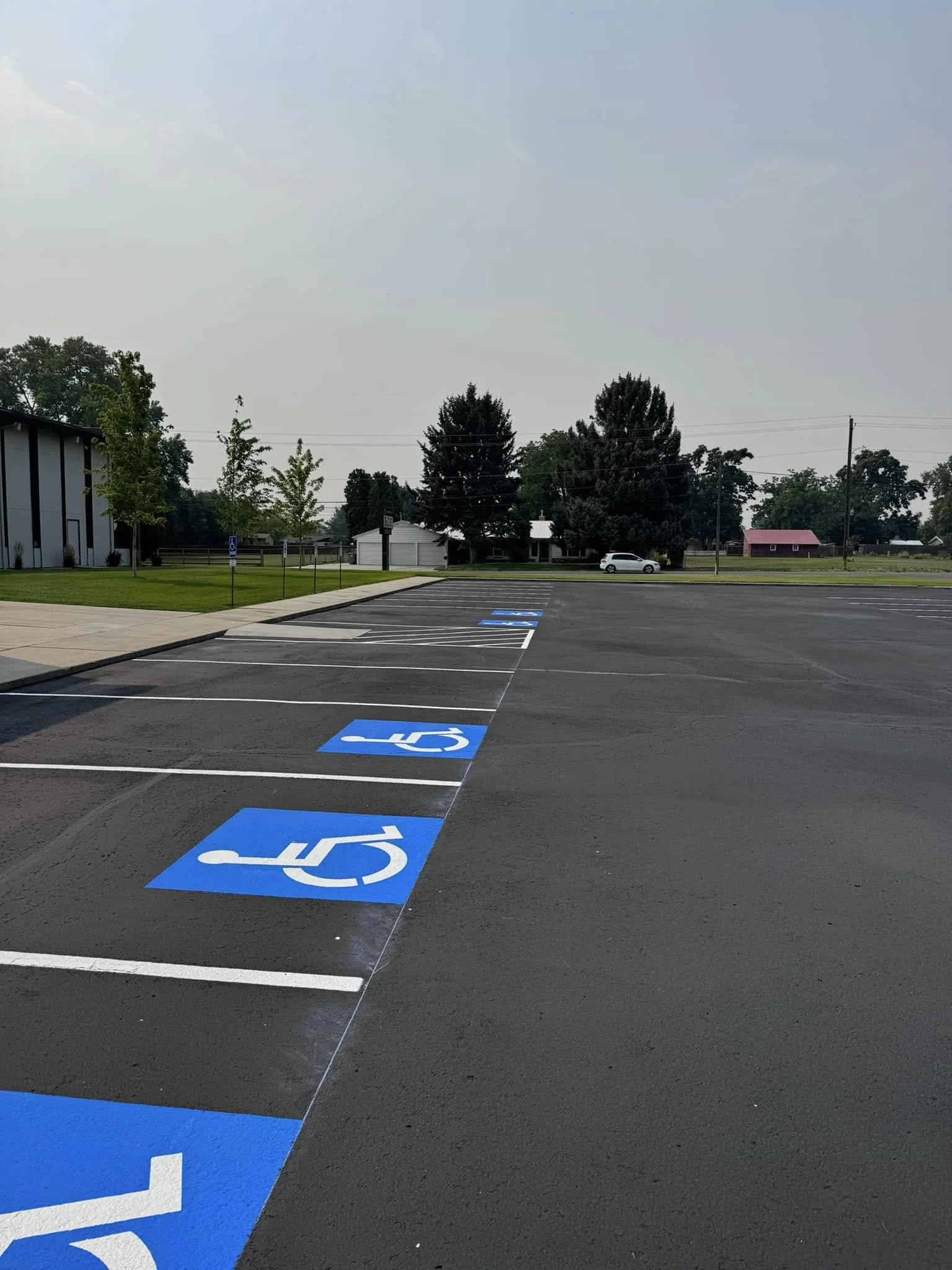
Accessible spaces get laid out to federal ADA requirements, which are identical in every Idaho city.
| Requirement | Section | Value |
|---|---|---|
| Car space width | 502.2 | 96 inches minimum |
| Van space width | 502.2 | 132" min, or 96" where the aisle is 96" |
| Access aisle width | 502.3.1 | 60 inches minimum |
| Access aisle length | 502.3.2 | The full length of the space it serves |
| Shared aisle | 502.3 | Two spaces may share one |
| Aisle marking | 502.3.3 | Marked to discourage parking. No color specified. |
| Sign | 502.6 | Bottom of sign 60 inches min above the ground |
The Van Rule (208.2.4): One van space for every six or fraction of six required accessible spaces. Not one per six total spaces. A hundred space lot needs four accessible spaces and one van space.
When the stall is fine and the sidewalk is not
Fully noncompliant stalls are uncommon. The more common problem is that the stall and the access aisle look fine, while the sidewalk or curb ramp beside them does not comply and needs to be removed and replaced.
When our crew sees it: It goes in the estimate, the customer is told the condition may not comply, and if they want it corrected, we quote that separately.
The order we work in
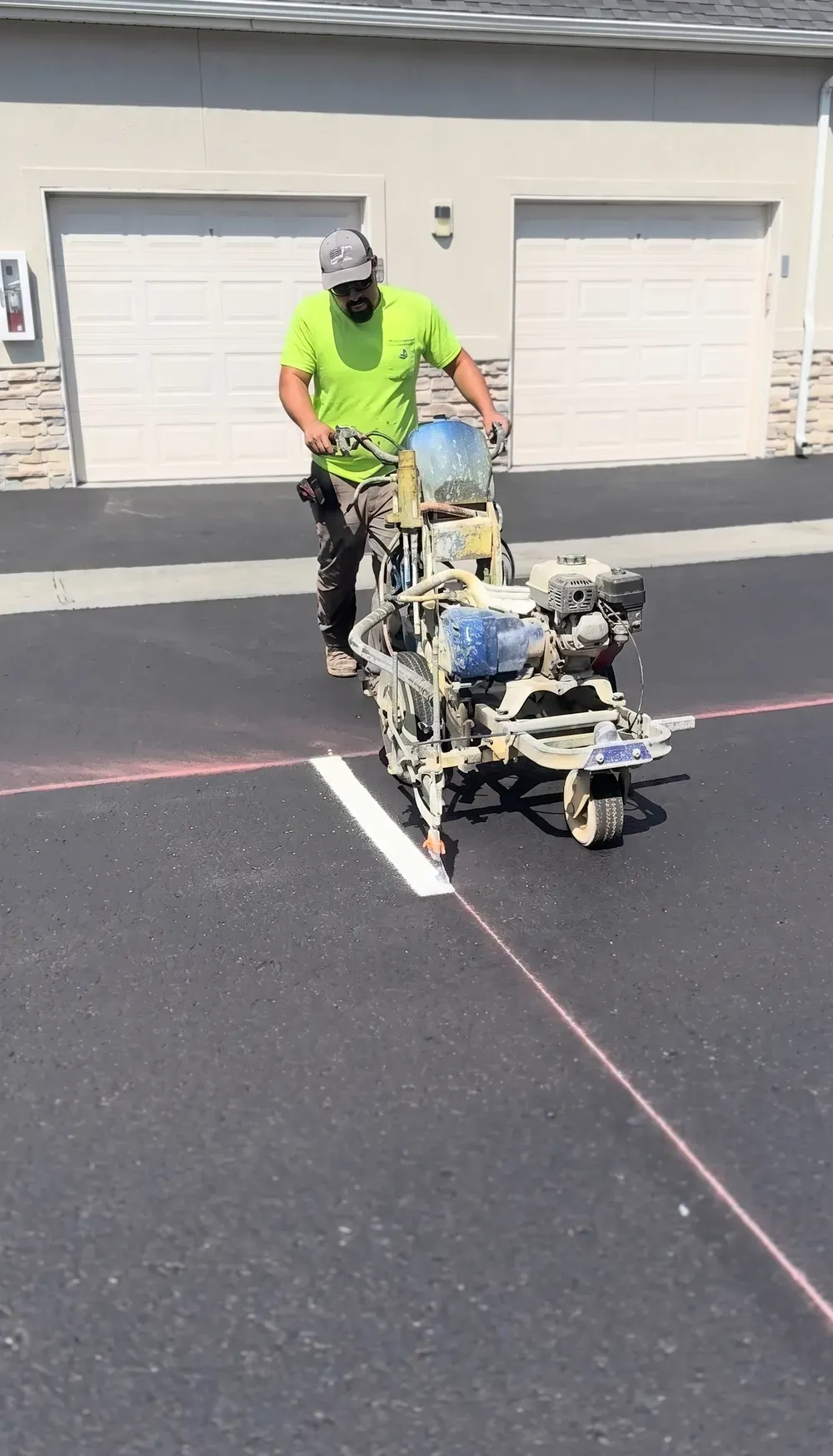
- Lay out all the parking stalls.
- Chalk the layout.
- Paint the accessible space symbols and markings. (These go in before standard stalls).
- Stripe the standard stalls.
- Finish speed bumps, arrows, curbing, and stencil work.
A typical crew is two to three people. On larger lots we run both striping machines so the layout can be completed in one coordinated visit.
Markings, curbing and stencils
Numbered stalls, directional arrows, speed bump markings, wheel stops, crosswalks and curb painting. Custom lettering is available at roughly 6, 12, 24 and 36 inch sizes.
Fire-lane color and wording can differ by jurisdiction. We confirm the required marking with the local fire authority before painting rather than applying one rule across every city.
What goes into your striping estimate
What we paint with
Our normal application is one coat of oil-based Sherwin-Williams traffic paint from the SETFAST line.
Dry time is normally about 15 to 20 minutes depending on pavement and weather conditions. Layout and access - not the paint alone - determine the full job schedule.
What it costs
Striping runs about $0.35 per lineal foot. The final estimate moves with lot size, whether the layout is new or existing, stencil count, curbing, arrows, lettering and access restrictions.
Numbering and custom lettering are priced by character, size, repetition and layout complexity.
Numbered apartment stalls
Assigned parking is one of the most common sources of resident conflict. Clear numbering gives property managers and HOA boards a layout they can actually enforce.
Seal first, stripe second
If a lot needs both services, sealcoating is completed before the new striping goes down. This avoids covering fresh lines and gives a confusing, repeatedly striped lot a clean starting point.
Lines that stay clear when the lot gets busy
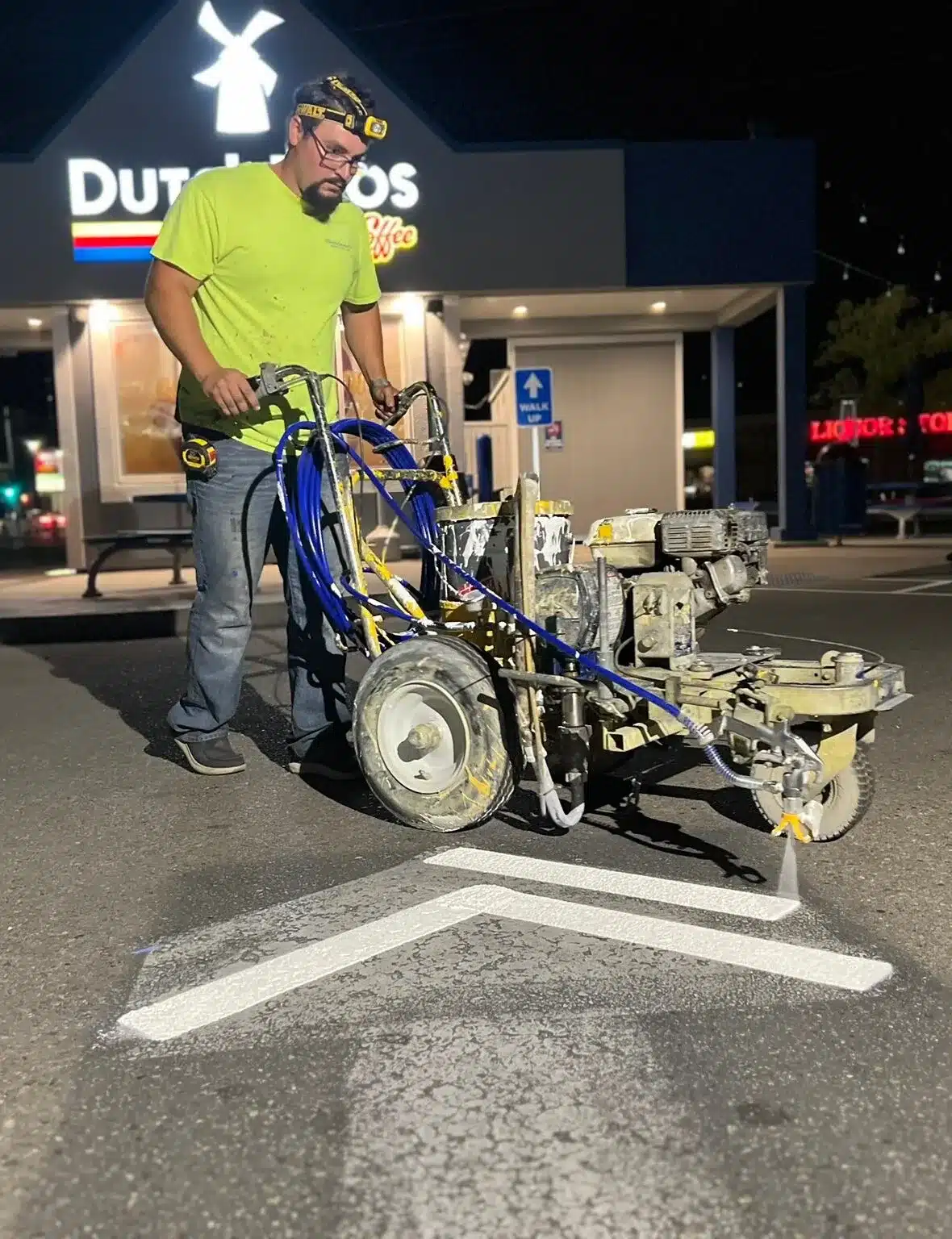
Striping across the Treasure Valley
Heron Village Apartments
About 73,850 square feet with more than 150 numbered stalls and about 5,000 linear feet of red curbing.
View the Meridian project →Cherry Lane Apartments
About 50,000 square feet and five services, including striping, completed in two days by a three-person crew.
View the repeat project →Farmstead Apartments
Striping delivered as part of a five-phase, 500,000-square-foot project with more than a dozen new asphalt speed bumps.
View the Nampa project →Striping and connected pavement services
Parking lot striping FAQ
How much does parking lot striping cost?
Striping runs about $0.35 per lineal foot. Layout complexity, stencils, curbing, arrows, lettering and site access determine the final estimate.
How long does a parking lot have to stay closed?
The oil-based traffic paint normally dries in about 15 to 20 minutes, depending on conditions. A complete lot takes longer because it must be laid out, chalked and painted in sequence.
How many accessible parking spaces does my lot need?
The count comes from ADA Table 208.2 and changes with the total number of spaces. One van space is required for every six, or fraction of six, required accessible spaces.
Does the ADA require a symbol painted on the pavement?
The federal standard requires a mounted sign with its bottom at least 60 inches above the ground. A pavement symbol is common practice, but it is not the federal sign requirement.
Are accessible parking rules different in Meridian than in Nampa?
No. Idaho Code 39-4116 does not allow cities to amend accessibility provisions, so the federal accessible-parking requirements apply consistently across Idaho cities.
Should I sealcoat before striping?
Yes, when both services are needed. Sealcoating is completed first, followed by the final layout and striping.
Can you number the stalls in an apartment complex?
Yes. We paint numbered stalls and custom lettering, with pricing based on character size, quantity, repetitions and layout complexity.