
Sealcoating and pavement maintenance for Treasure Valley HOAs
Bring your board a clear pavement plan. Select Coatings provides full commercial pavement maintenance, including sealcoating, repairs and striping for Treasure Valley associations, with a written scope and phased work planning. Tell us about your property, resident access needs and board review date.
See phased work at Farmstead Apartments in Nampa. Explore our multifamily project experience and apartment parking lot work for an example of planning around residents.
- We give you a written proposal with phases, dates and a map, built to be presented rather than just quoted.
- Work gets phased so residents keep their parking. The Farmstead Apartments in Nampa ran in five phases across 500,000 square feet.
- $2 million general liability through State Farm. Certificate of insurance and W-9 on request.
- Quoted pricing holds for up to a year, which covers most board approval timelines.
- Residential asphalt wants resealing every three to five years.
What Eagle requires of private street associations
Eagle City Code 9-3-2-5
See the preparation and application process for commercial parking lot sealcoating. For Eagle associations, explore HOA and private street pavement maintenance in Eagle.
Eagle City Code 9-3-2-5 requires a homeowners' or property owners' association, or a similar entity, to be responsible for the ongoing upkeep of private streets and alleys. Property owners have to keep a maintenance plan and funding reserves.
If standards are not met, the city council can order repairs and require the responsible entity to reimburse the city's costs.
A reserve funded maintenance plan is easier to defend at a meeting than an emergency assessment after the pavement fails.
Scope note: This section applies specifically to private streets in Eagle. Associations in Meridian, Nampa, Boise or other jurisdictions should check their own CC&Rs and applicable city requirements before relying on the Eagle provision.
What we send you
We build it so the person presenting it does not have to explain it. You will receive a written proposal detailing:
Included in your document:
Boards take longer than a single owner does, and that is normal. Our quoted pricing holds for up to a year, which is longer than most approval cycles.
What your association is likely to need
We handle parking lot sealcoating, crack repair, patching, striping, speed bumps and snow removal. Residential asphalt normally needs resealing every three to five years, which gives boards a useful planning interval for reserve studies.
Numbered stalls: Assigned parking is one of the most common sources of resident conflict and numbering is how a board makes it enforceable.
Asphalt speed bumps: Traffic calming is a board decision with a safety argument attached and it is a separate line item rather than something folded into sealcoating.
How the work gets phased (Residents keep their parking)
We split large sites into phases so half works while the other half cures. Phases run 100,000 to 150,000 square feet and get smaller where access has to stay open to homes, parking, mailboxes and drive lanes.
Sealer needs to stay free of traffic before vehicles return, so phasing is a scheduling problem rather than a matter of working faster. Foot traffic at about two hours. Vehicles at twelve, and twenty four to keep the warranty.
The Farmstead Apartments in Nampa is about 500,000 square feet. Five phases, and nobody lost their parking spot.
The Notice Sequence
We give the board member the notice sequence to distribute to residents: about two weeks out, a reminder one week out, and a final notice the day before, with a map and phase dates.
What residents see when the phases are complete
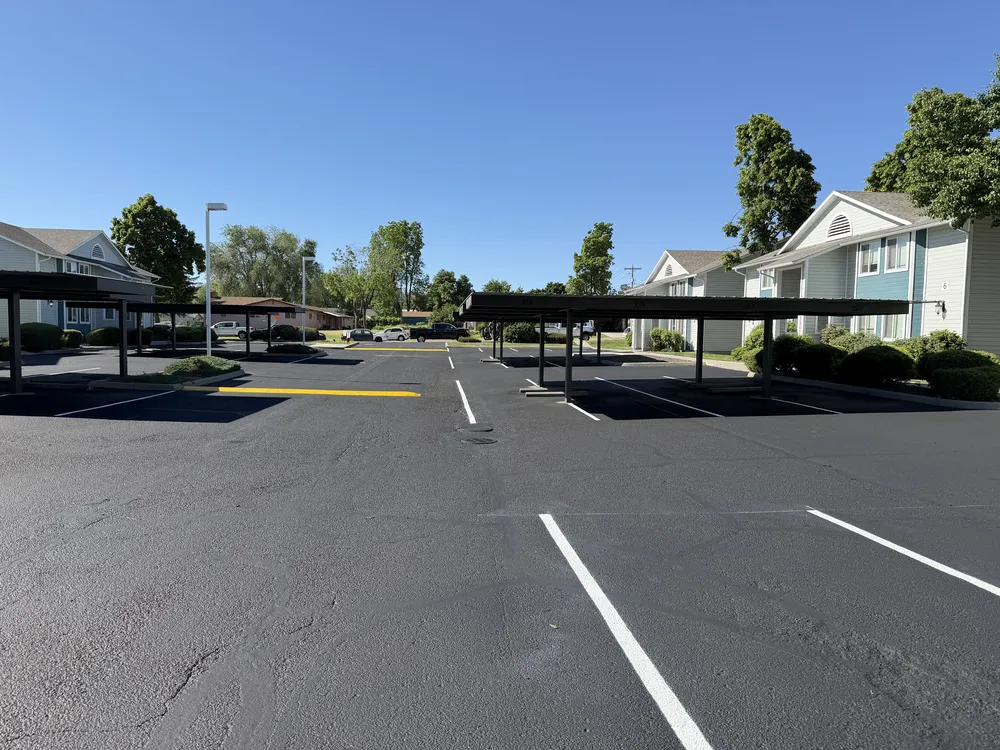
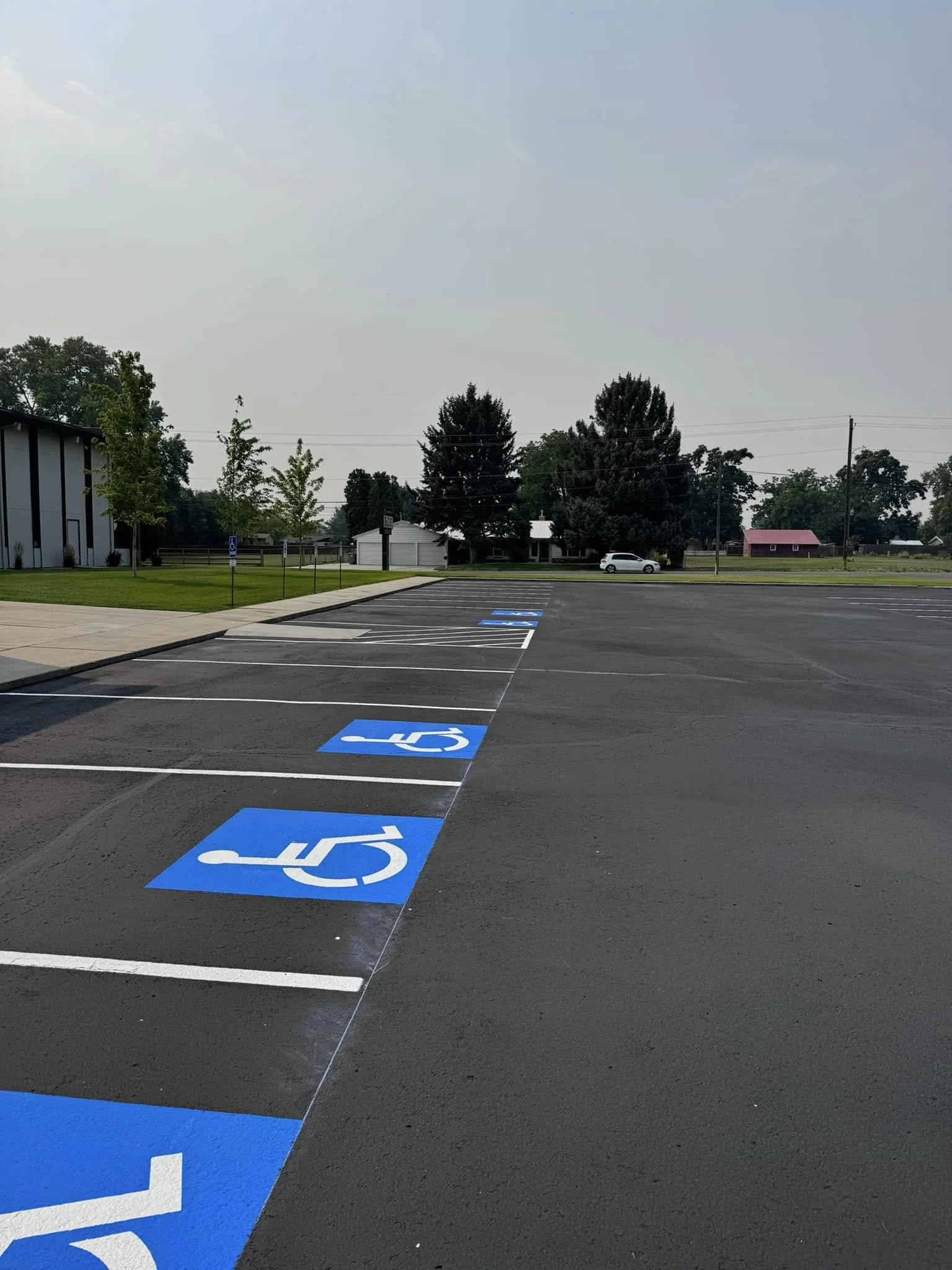
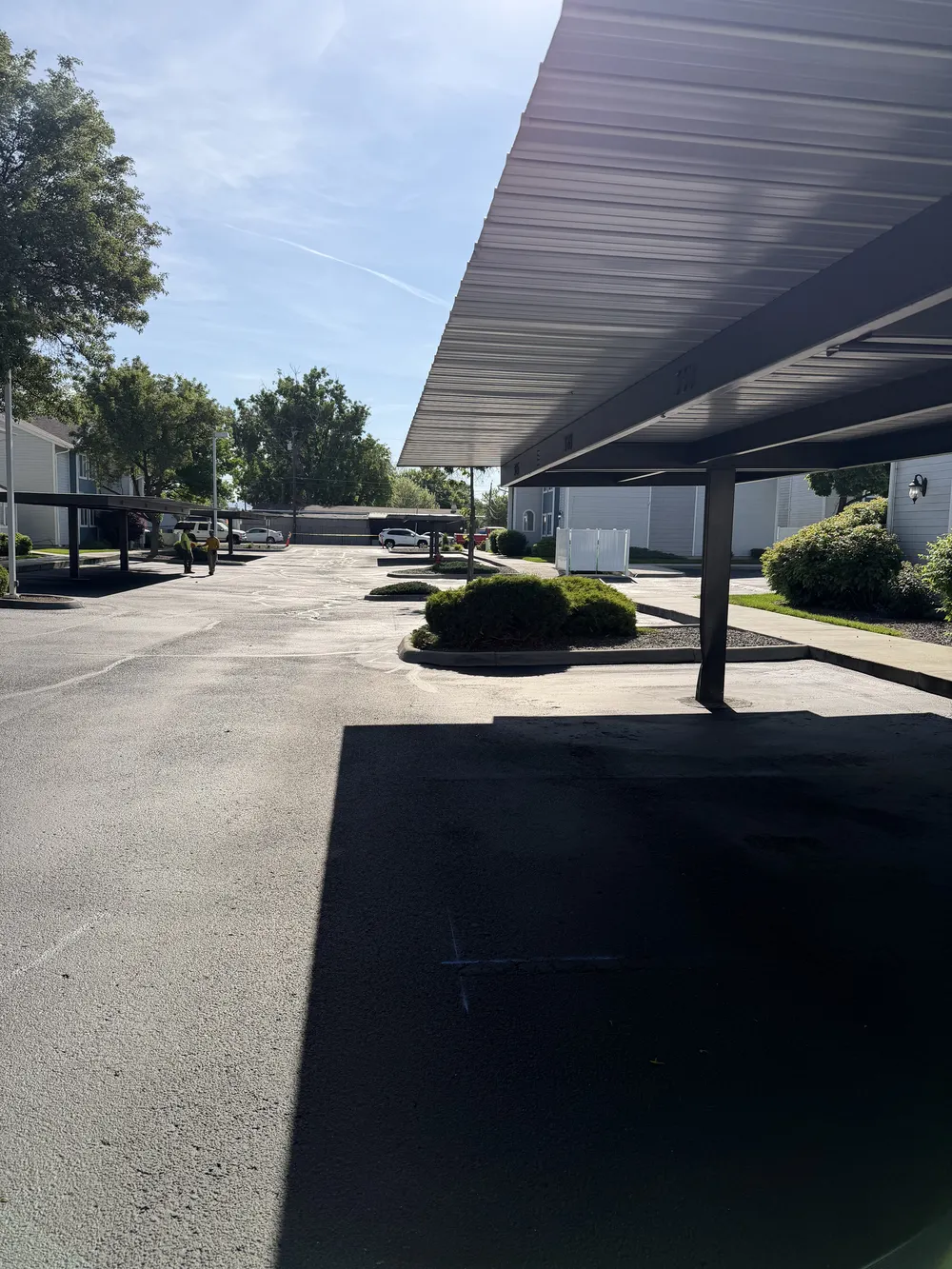
Proof of Execution
Cherry Lane Apartments, Meridian
About 50,000 square feet. Cleaned, crack filled, sealcoated, potholes patched and striped. Whole property completed in two days with a three man crew. Repeat customer.
View the project →Heron Village Apartments, Meridian
About 73,850 square feet, more than 150 numbered stalls and about 5,000 feet of red curbing to meet fire lane requirements.
View the project →The Farmstead Apartments, Nampa
About 500,000 square feet executed in five phases, with more than a dozen new speed bumps installed to calm traffic.
View the project →"Three of our four largest jobs were repeat customers."
Frequently Asked Questions
For private streets in Eagle, City Code 9-3-2-5 assigns ongoing upkeep to the homeowners' or property owners' association and calls for a maintenance plan and funding reserves. Requirements elsewhere should be checked against that association's CC&Rs and local city code.
Our quoted pricing holds for up to a year. We understand that HOA boards meet on a set schedule and need time to review and approve proposals.
Absolutely. We build our written proposals so they are ready for you to present at your next scheduled board meeting.
No. We split large sites into phases (typically 100,000 to 150,000 sq ft) so that half the property remains open for parking while the other half is being treated and cured.
Residential HOA asphalt typically needs resealing every three to five years to protect the surface from oxidation and water damage. This timeline helps board members plan their reserve studies.
Yes, we carry $2 million in general liability through State Farm and provide a Certificate of Insurance (COI) and W-9 upon request.