
Eagle HOA Boards
Private street maintenance for Eagle HOA boards
If your association owns the streets, Eagle City Code requires you to keep a maintenance plan and funding reserves. Connecting reserves to actual commercial pavement maintenance protects your community's investment. Most boards find that out late. Here is what it means and what it costs.
What the code actually says
Eagle City Code 9-3-2-5 does four things, and three of them surprise boards.
It assigns the responsibility.
A homeowners' or property owners' association, or a similar entity, has to be responsible for the ongoing upkeep of private streets and alleys. Engaging professional HOA pavement maintenance services ensures compliance, as there is no version where the city takes them back because the association ran out of money.
It requires a plan and reserves.
Property owners have to keep a maintenance plan and funding reserves. Not one or the other. A plan with no money behind it does not satisfy it, and a reserve balance with no plan attached is not a plan.
It gives the city a backstop.
Where the standards are not met, the city council can order the repairs and require the responsible entity to reimburse the city's costs. The work happens either way; the only variable is whether the association chose the timing.
It sets the construction standard.
Paved travel lanes at least twelve feet wide, private alleys at least ten. Construction to Ada County Highway District structural standards for base course and asphalt mat. This matters if your association is arguing with a developer about what was handed over.
What this does not mean
Two things, because a page like this can be read as a threat and it should not be.
Nobody is coming to inspect your streets this month. The enforcement mechanism gets used when pavement has failed badly enough to become a problem. The point of knowing about it is that it removes the option of doing nothing indefinitely, not that there is a deadline next quarter.
You are not behind if you have no plan yet. Most associations in Eagle do not have one, because most boards were never told. Writing the first one is a normal thing to do, not a remedial one.
The useful way to think about this is that a funded maintenance plan is much easier to defend at an annual meeting than an emergency assessment. Owners resent the board that let an emergency happen.
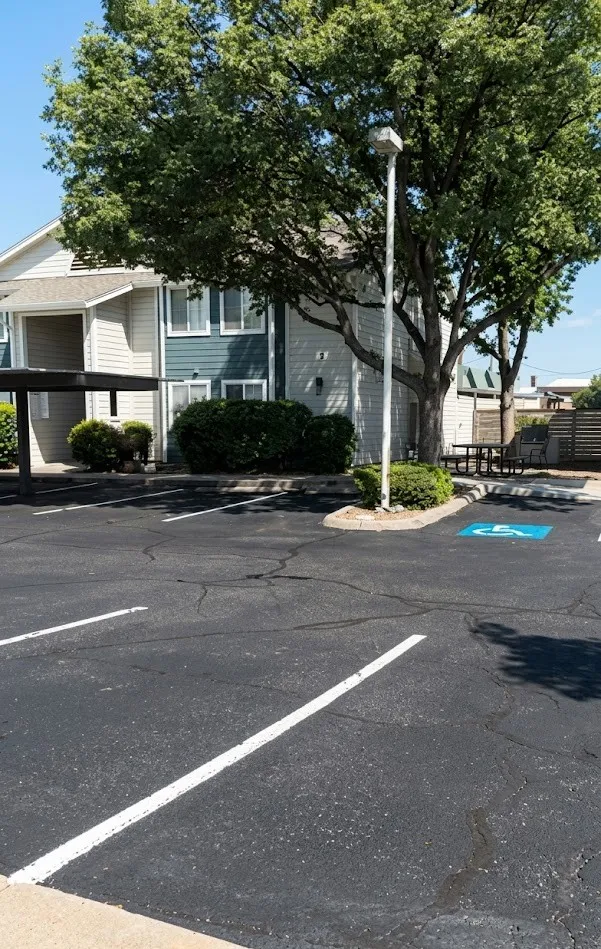
Residents keep their parking
This is the objection somebody raises in the meeting, so bring the answer with you.
We phase the work so half the streets are open while the other half cures. It is a scheduling problem rather than a matter of working faster. Foot traffic at about two hours. Vehicles at twelve, and twenty four to keep the warranty.
We also produce the resident notices, because in an association nobody else is going to. About two weeks out, a reminder one week out, and a final notice the day before, each with a map and the phase dates.
The largest property we have phased this way is about 500,000 square feet, run in five phases, and nobody lost their parking spot.
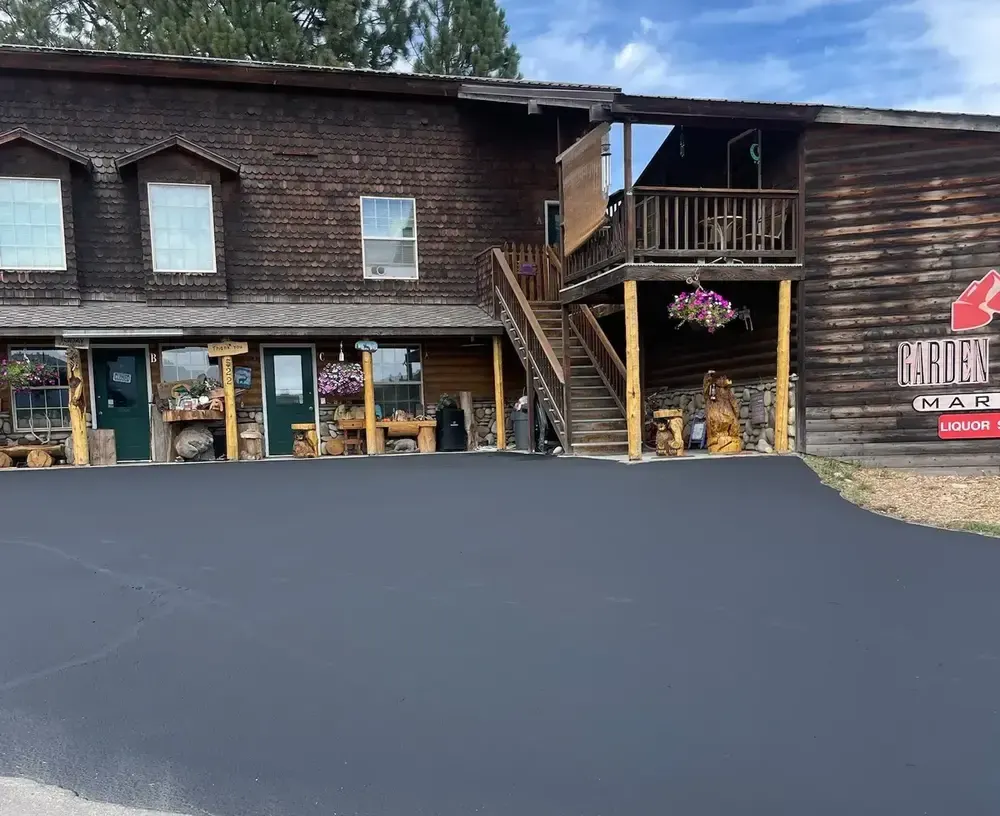
What a maintenance plan actually contains
Boards ask for a proposal and get a price. That is not a plan and it will not satisfy anybody who asks. What we put together looks like this:
A condition report
Which sections are sound, cracking, past sealing, or structural. A failed base requires major reconstruction or private street paving, which is a different order of cost from a worn surface.
A schedule, in years
Residential asphalt wants resealing every 3 to 5 years. Crack sealing runs on a shorter cycle. Setting both against your actual street footage turns it into a reserve line.
Phasing & Maps
Large sites get split. Phases run 100,000 to 150,000 square feet and get smaller where access has to stay open to homes and mailboxes. Includes exact dates and maps.
The one number to bring to the meeting
Residential asphalt wants resealing every three to five years.
That single figure converts a one time approval into a recurring line. A board that puts the 3 to 5 year cycle into the reserve study has satisfied the funding half of the code and made the next board's job easier.
Eagle averages about 108 freezing nights a year on 11.5 inches of precipitation (measured at Boise Air Terminal). When scheduling Eagle asphalt services, remember pavement here does not fail from rain. It fails from freezing and thawing on cracks that were open when winter started.
What it costs
| Commercial and association sealcoating, typical | About $0.22 per sq ft |
|---|---|
| Tear out and repave | About $4 per sq ft |
| Speed bumps | $350 to $500 each |
| Striping, restripe | About $7.00 per stall |
| Striping, new layout | $12 to $15 per stall |
| Snow plowing | $125 first hr, then $75/hr |
Quoted pricing holds for up to a year
Boards take longer than a single owner does, and that is normal. You should not be choosing between a good decision and a price that expires before the next meeting.
What your association is likely to need:
- Crack sealing: The first thing to price and the cheapest. Pushes expensive work further out.
- Speed bumps: Ours are asphalt, formed and compacted in place rather than bolted down. Rubber bumps rattle and do not survive a plow season.
- Numbered stalls: Where the association has assigned parking. Numbering makes assignments enforceable.
Questions Eagle boards ask
Does our HOA have to maintain our private streets in Eagle?
Yes. Eagle City Code 9-3-2-5 requires a homeowners' or property owners' association, or a similar entity, to be responsible for the ongoing upkeep of private streets and alleys, and requires property owners to keep a maintenance plan and funding reserves.
What happens if we do not?
Where the standards are not met, the city council can order the repairs and require the responsible entity to reimburse the city's costs.
Will the city take our streets over?
No. The code assigns the upkeep to the association. There is no provision for handing private streets back because the association would rather not maintain them.
How often do private streets need sealcoating?
Every three to five years for residential asphalt. Crack sealing runs on a shorter cycle and is what determines whether the longer interval holds.
Do we need a reserve study to satisfy the code?
The code requires a maintenance plan and funding reserves. Most associations handle that through the reserve study they already produce, with the pavement schedule and costs added as a line. Partnering with an experienced local pavement contractor helps establish an accurate condition report from which that reserve line is built.
Can you break the work into phases so residents keep access?
Yes, and on any street network of size we would recommend it. Phases run 100,000 to 150,000 square feet and get smaller where access has to stay open to homes and driveways. Foot traffic returns at about two hours and vehicles at twelve.
How long does your quote stay good?
Normally up to a year, which is longer than most board approval cycles.
Start with a condition report
If your board does not know what shape the streets are in, that is the first thing to fix and it costs nothing.
Tell us the subdivision to request an HOA reserve review and we will walk the streets and put the condition in writing. No charge, and no obligation to use us for the work.