
Nampa Snow & Ice Management
Snow removal in Nampa, Idaho
Nampa gets about 132 nights a year below freezing, more than anywhere else in the valley. We would rather treat your lot before the storm than dig it out after.
The number that makes Nampa different
Nampa records about 132 nights a year that drop below freezing. That is the highest of any city in this part of Idaho, and it is not close.
The distribution matters more than the total. January averages 27.7 freezing nights, December 26.5, February 22.8, November 20.6. June, July and August have none at all. So the whole year's worth arrives in a five month stretch, and the mean daily high in the coldest month is still about 40°F.
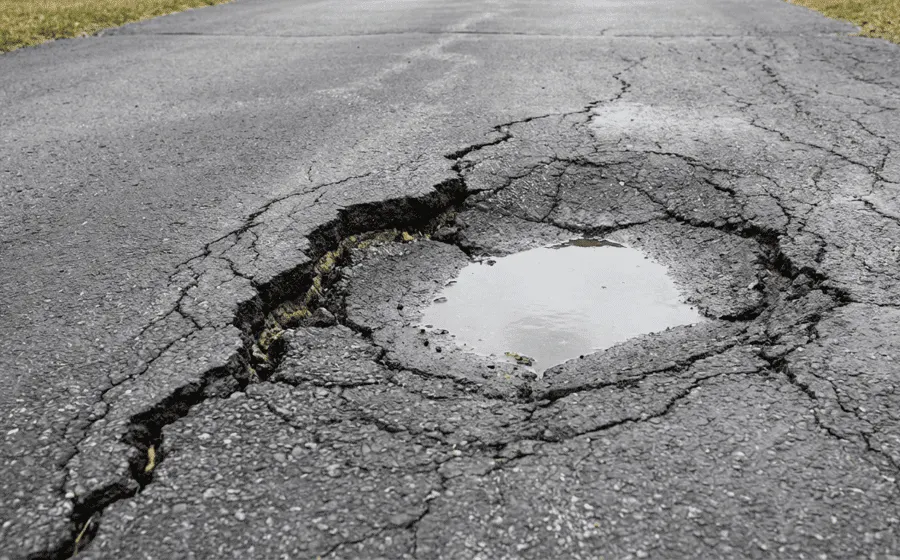
Which means most of those 132 nights are followed by a day above freezing. Water in your pavement freezes overnight, expands, and thaws by afternoon, over and over, from November through March.
That is what breaks a parking lot here. Not the snow itself, which averages a little over nineteen inches a year by the city's own figure. The cycling.
It is also the reason winter is not a dead season for pavement. A crack that goes into November open is a crack that will be measurably wider in March, and the ice management you do over the winter is part of what determines how much patching you buy in the spring.
What the city plows, and what it does not
This catches people out every year, and it is published policy.
Nampa runs three levels of service. Priority one is collectors and main arterials, cleared within 24 hours. Priority two is secondary streets serving schools and medical centers, within 48 hours.
Priority three is residential streets, and those are not cleared at all until accumulation reaches six inches, and then within 96 hours. The city uses sand, salt and de-icer.
Read that as a commercial property owner. If your building sits off a residential street, a four inch snowfall means the city does nothing, for as long as it lasts. Your lot can be perfectly clear and your customers still cannot reach it.
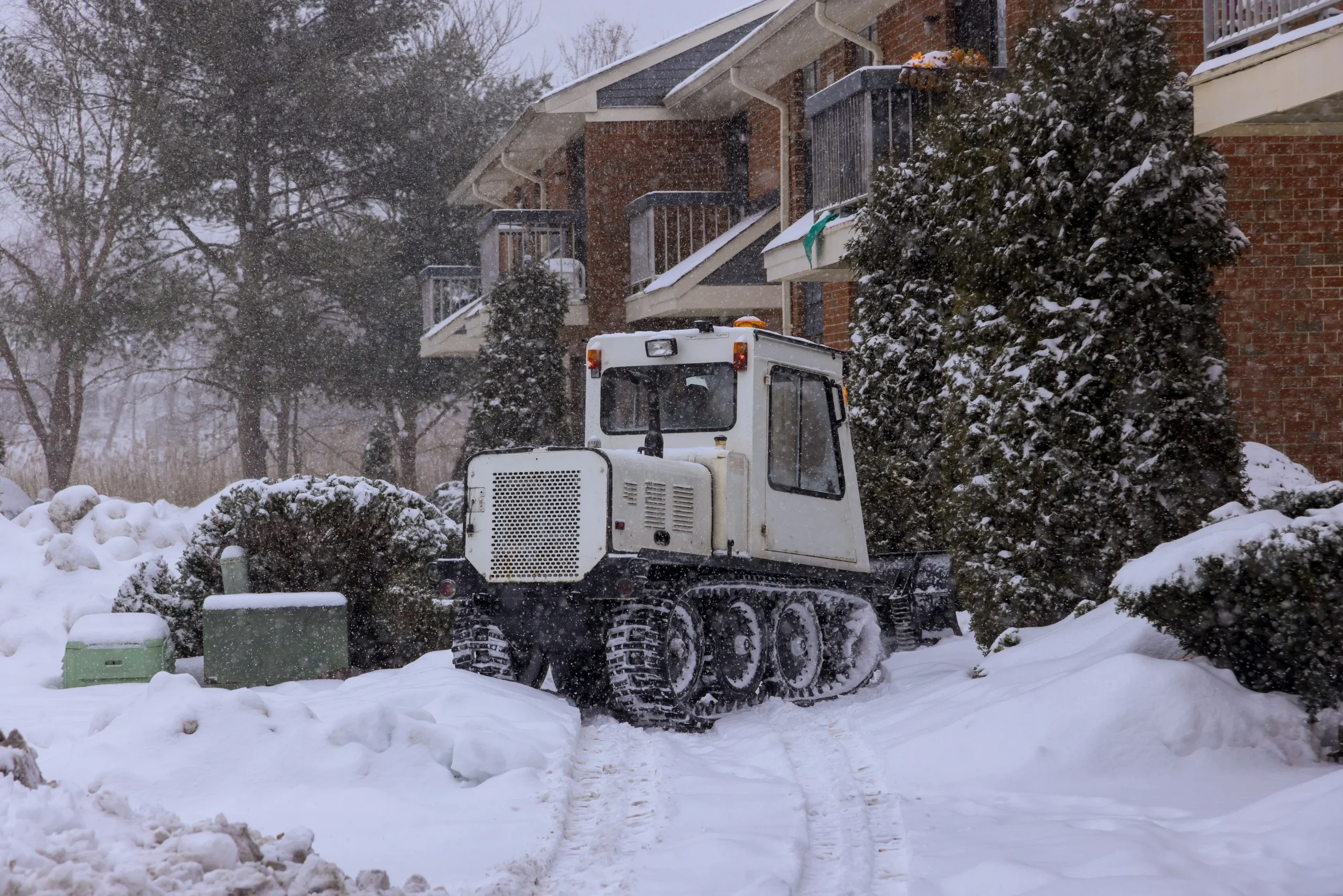
That is worth planning around rather than discovering. It is also the argument for treating early: on a storm the city will never touch, the difference between a lot that stayed ahead of it and one that did not is the whole difference.
Getting there before the snow
We bill for the material we apply, so the coverage difference lands on your invoice rather than on ours. A property that stays ahead of the weather costs less over a season than one that gets rescued after every storm, and the gap is not small.
Pretreating does the other thing too, which is that it keeps ice from bonding to the pavement in the first place. Once a sheet has bonded, clearing it means either more material or more machine time, and usually both.
1 Gallon of Liquid Ice Melt
Same material, same lot. The only thing that changed is when we got there.
You set the trigger
Every property is different and you know yours better than we do. So the trigger is yours to set.
Ice melt only
We treat, and we do not plow.
Plow at 1 inch
Common for medical, retail and anywhere with foot traffic.
Plow at 2 inches
Common for industrial and warehouse sites.
Your number
Whatever depth the property actually needs.
What it costs
| Plowing, first hour | $125 (1 hr minimum) |
|---|---|
| Plowing, after first hour | $75 an hour |
| Liquid ice melt | Billed by the gallon applied |
The half-hour increment
After the first hour we bill in half hours, not full ones. If a push takes an hour and twenty minutes, you are billed for an hour and a half, not two. That is the most common place a snow invoice goes wrong and we would rather have it in writing than in an argument.
Where our service stops
We do parking areas and drive lanes. We do not do sidewalks, playgrounds or similar pedestrian areas.
That matters in Nampa specifically, because the city holds you responsible for them. Nampa's code enforcement position is that property owners are responsible for the maintenance of all adjacent rights-of-way, including sidewalks, curbs and gutters, and that maintenance includes snow removal.
There is no fixed hourly rule in Nampa, whatever anyone tells you. The deadline is "in a timely manner." If your property has sidewalk frontage, that piece needs somebody. It is not us.
Before the season starts
Two things are worth doing in September or October rather than in December.
Walk the lot with us. We agree on the stacking areas, note where the drains and swales are, and mark anything that a plow blade should not find. A lot with nowhere to put the snow costs more to clear, and it is better to know that in advance.
Sign the contract early. By the time the first storm is in the forecast, the schedule is full and everybody is calling the same contractors on the same afternoon.
Questions we get in Nampa
How much snow accumulation before a parking lot is plowed in Nampa?
Whatever depth the customer sets in the contract. Common choices are one inch for retail and medical properties and two inches for industrial sites.
What does commercial snow removal cost in Nampa, Idaho?
Plowing is $125 for the first hour, then $75 an hour billed in half-hour increments, with a one hour minimum. Liquid ice melt is billed by the gallon applied.
Is it cheaper to treat a parking lot before a snowstorm?
Yes, and the difference is large. On clean, dry pavement a gallon of liquid ice melt covers about 200 square feet. Once snow is already down, the same gallon covers 25 to 50 square feet. Since material is billed as applied, treating first lowers the seasonal cost.
Does Nampa plow residential streets?
Not until accumulation reaches six inches, and then within 96 hours. Collectors and main arterials are cleared within 24 hours, and secondary streets serving schools and medical centers within 48 hours.
Who is responsible for clearing the sidewalk in front of a building in Nampa?
The property owner. Nampa holds property owners responsible for maintaining adjacent rights-of-way including sidewalks, curbs and gutters, and that includes snow removal. The requirement is to clear it in a timely manner, and the city code sets no fixed hourly deadline.
How many freezing nights does Nampa, Idaho get?
About 132 nights a year drop below freezing, the most of any city in the area. None occur in June, July or August, so the whole total falls in a five month stretch, and most are followed by a day above freezing.
When should a commercial snow contract be signed in Nampa?
September or October. By the time the first storm appears in the forecast, most of the season is already booked.
Get a winter quote for your Nampa property
Tell us the address and the trigger depth you want, and we will walk the lot and put a season price in writing before the weather turns.